
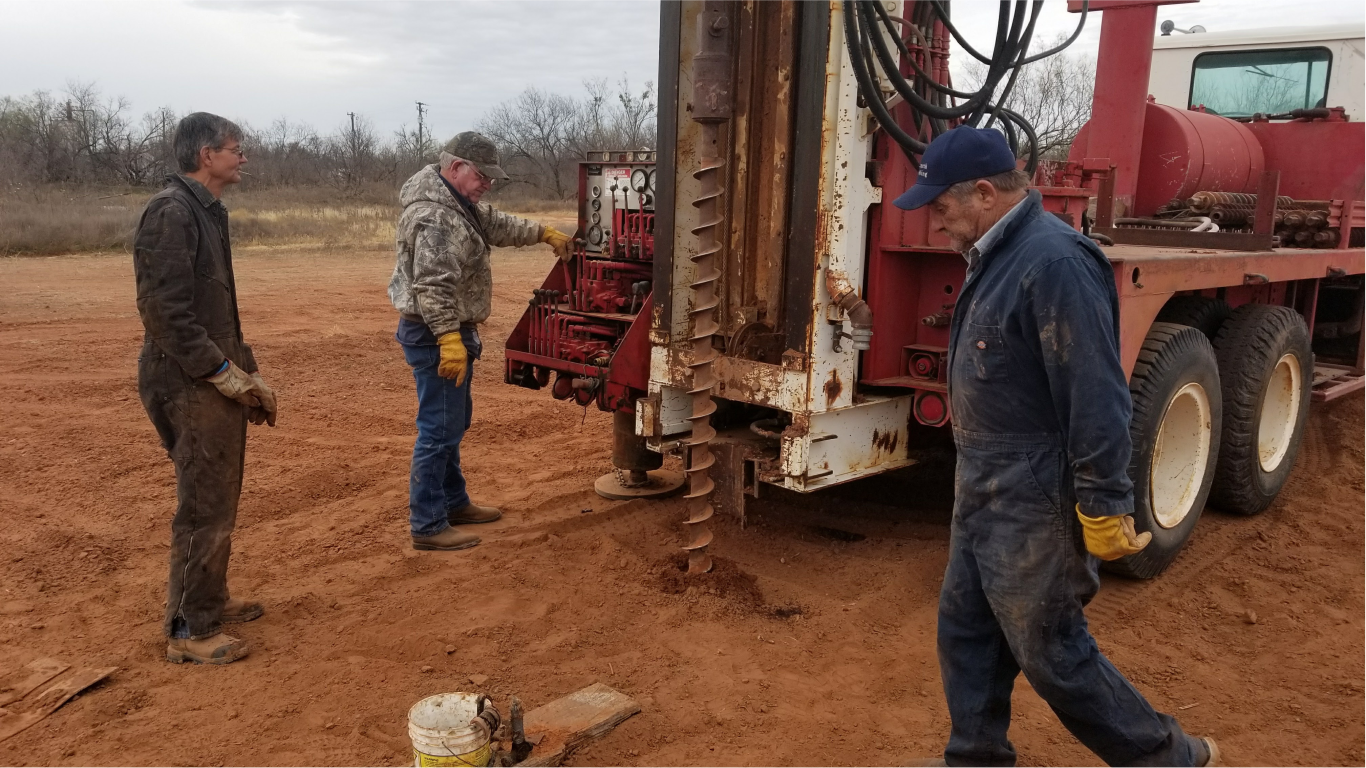
Successful aggregate deposit acquisition in the Southwest requires far more than identifying material in the ground. In practice, viable sand, gravel, and limestone resources must be evaluated through a coordinated review of land position, mineral rights, logistics, permitting risk, and long-term operational feasibility. Aggregate Consulting provides specialized Deposit Acquisition Consulting services throughout Texas, New Mexico, Oklahoma, and surrounding markets, combining field-based aggregate expertise with professional landman services to reduce acquisition risk before capital is committed.
Executive Summary
Securing a viable aggregate deposit is not simply a matter of locating material and signing a lease. In the Southwest United States, successful acquisition requires disciplined evaluation of geology, land ownership, mineral rights, access, haul distance economics, and regulatory considerations. In our experience, the majority of failed acquisitions do not fail due to lack of material, but due to flawed land positioning, incomplete due diligence, or unrealistic operational assumptions. A structured acquisition methodology significantly improves long-term project viability and protects investors, operators, and landowners from avoidable risk.
The Reality of Aggregate Deposit Acquisition in the Southwest
Unlike oil and gas or other extractive resources, aggregate deposits are highly location-sensitive and economically constrained by transportation costs and local market demand. A deposit that appears attractive based on surface observations or limited drilling may ultimately prove non-viable due to zoning restrictions, access limitations, stripping ratios, processing requirements, or excessive haul distances. Having evaluated and developed multiple aggregate operations across Texas and surrounding regions, real-world experience consistently shows that operational feasibility must be evaluated alongside geological potential from the earliest stages of acquisition.
Importance of Land Positioning and Title Due Diligence
One of the most overlooked aspects of aggregate deposit acquisition is the land and mineral position. Promising deposits often involve multiple ownership tracts, severed mineral estates, legacy title issues, or access constraints that can significantly impact long-term development. Aggregate Consulting coordinates acquisition efforts with Senior Landman Shawn Scholl (University of Oklahoma – Petroleum Land Management), providing specialized expertise in mineral title research, ownership verification, lease structuring, and land assembly for resource development projects throughout the Southwest.
Proper title and land due diligence may include verification of mineral and surface ownership, identification of title defects or encumbrances, evaluation of easements and access corridors, and analysis of royalty structures. Without this level of review, operators may secure surface control while lacking full mineral rights, or encounter legal and operational complications after significant capital investment has already occurred.
Common Mistakes in Aggregate Deposit Acquisition
Based on decades of operational and consulting experience, several recurring acquisition errors are observed in the aggregate industry. These include securing land positions prior to confirming economic reserves, relying solely on limited drilling data, ignoring haul distance and market radius economics, and failing to conduct comprehensive mineral title verification. Additional risks include poorly structured royalty agreements, inadequate access planning, and failure to evaluate permitting and zoning constraints early in the acquisition process.
These mistakes can significantly reduce project value, delay development timelines, and increase legal and financial exposure. A disciplined acquisition framework is essential to identifying these risks before acquisition commitments are finalized.
A Coordinated Consultant and Landman Acquisition Model
Effective deposit acquisition requires integration of technical evaluation and land expertise rather than isolated analysis. Aggregate Consulting utilizes a coordinated consultant and landman model that combines field-based aggregate evaluation with professional land acquisition strategy. This approach provides clients with a comprehensive understanding of both the physical deposit and the legal land position prior to lease, purchase, or option agreements.
Services may include preliminary deposit screening, land and mineral ownership analysis, access and infrastructure review, coordination of drilling and geological evaluation where appropriate, and advisory support during negotiation and acquisition structuring. This unified process helps ensure that deposits secured today remain operationally and economically viable over the long term.
Southwest Market Considerations (Texas, New Mexico, Oklahoma)
The Southwest aggregate market presents unique acquisition challenges driven by rapid urban expansion, increasing infrastructure demand, fragmented rural land ownership, and evolving regulatory requirements. In many cases, deposits located near growth corridors are becoming increasingly valuable, but also more complex to secure due to competing land uses, zoning considerations, and environmental constraints. Water availability, processing logistics, and proximity to end-use markets must also be evaluated during the acquisition phase.
About the Team
Aggregate Consulting is led by John M. Pitts Jr., a fourth-generation aggregate industry professional with over 36 years of experience in deposit evaluation, plant design, and aggregate operations, including dredge-fed and dry pit facilities across multiple regions. This operational background provides practical, field-tested insight into the economic and logistical realities of aggregate resource development.
Shawn Scholl, Senior Landman (University of Oklahoma – Petroleum Land Management), provides specialized expertise in mineral title research, land acquisition strategy, lease negotiations, and land positioning for aggregate and resource development projects throughout the Southwest United States.
Conclusion
Successful aggregate deposit acquisition requires far more than identifying material in place. It demands a disciplined evaluation of land position, mineral rights, operational feasibility, regulatory constraints, and long-term market logistics. A coordinated consulting and landman approach significantly reduces acquisition risk and provides investors, operators, and landowners with a clearer understanding of project viability before substantial capital and development commitments are made.