Independent Dredge Consulting for Sand & Gravel and Mining Operations
Dredging for sand and gravel is a small, specialized corner of the overall dredging industry. Most of the technical support available to operators comes from vendors marketing products, and while vendors can be valuable resources, undisclosed conflicts of interest are common. Aggregate Consulting works as a fiduciary and as the operator’s advocate: independent, vendor-neutral, and focused on the specific economics of producing aggregates from dredged material.
Dredge Selection
A dredge is not a commodity. The right machine for a 50-acre pond producing washed concrete sand is not the right machine for a long, narrow river bottom producing road base, and neither is the right machine for a hard-rock-bottom pit that’s been dredged for thirty years. We work with operators evaluating new dredges and operators trying to figure out why an existing dredge is underperforming. The systems we cover include:
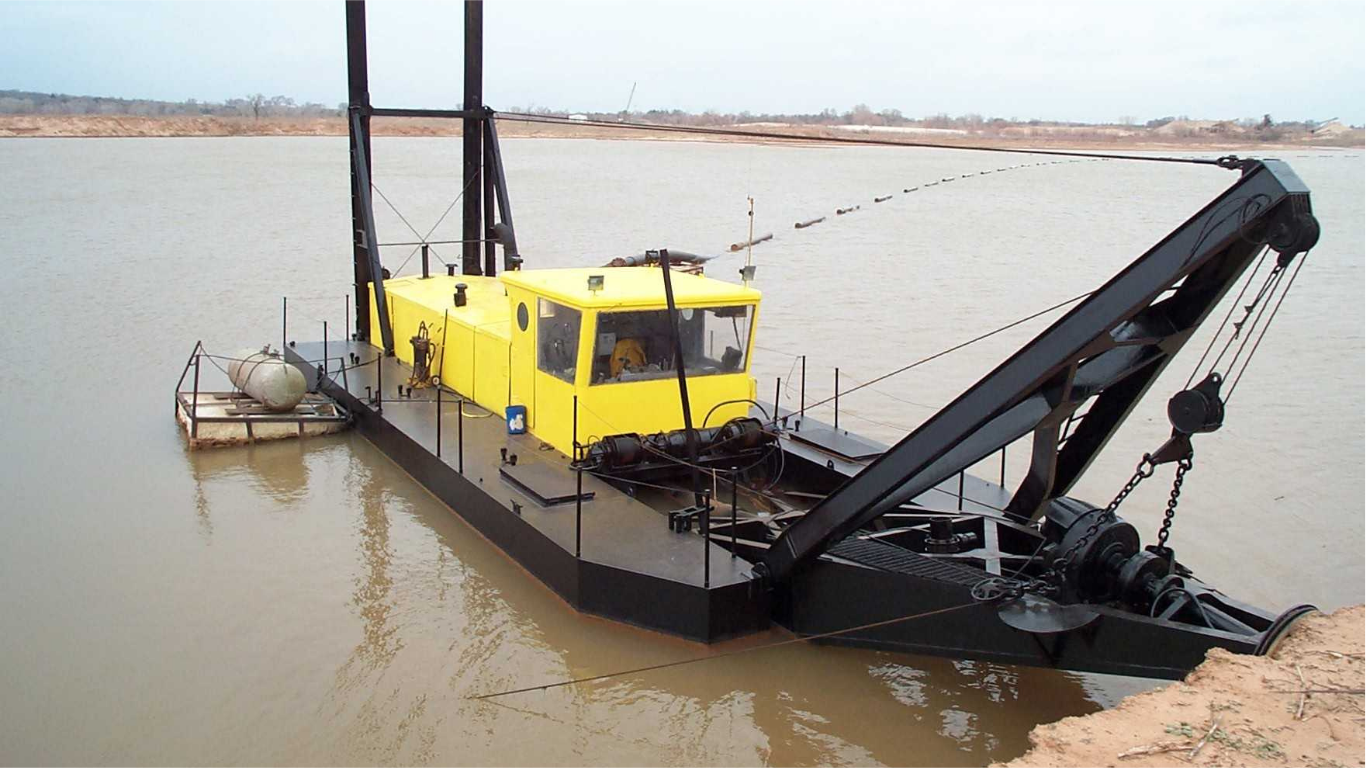
- Cutterhead dredges, portable and mid-size cutterhead machines for sand and gravel, including evaluation of cutter horsepower, suction line geometry, swing winch capacity, and matching the cutter to the formation
- Chain-ladder (bucket-ladder) dredges, for deeper deposits and consolidated material; evaluation of bucket size, chain speed, ladder angle, and the wear economics of the chain system
- Auger and screw-type dredges, for fine-sand operations where minimum disturbance and high recovery of suspended fines matter; evaluation of auger geometry and shroud design
- Large-scale dredges, including hopper, hydraulic suction, and trailing suction systems for larger commercial operations
The selection question is rarely just “which dredge.” It’s “which dredge for this deposit, this depth profile, this pond layout, this product mix, this market, and this labor pool”, independent of any vendor.
Hydraulics: Booster Pumps and Pipeline Losses
Dredge output is a pumping problem as much as a digging problem. We evaluate:
- Booster pump sizing and placement along the discharge line, including the economics of an additional booster vs. running the main pump harder
- Pipeline losses, friction loss as a function of pipe diameter, length, elevation, and slurry concentration; the trade-off between pipe diameter (capex) and horsepower (opex)
- Slurry concentration and specific gravity, confirming the system is actually moving the tonnage the operator thinks it is
- Discharge configuration, whether the discharge point and stacker geometry are giving the plant the feed it needs
A surprising amount of underperformance traces to a pipeline that was right when it was installed and no longer matches the deposit being mined today.
Pond Layout, Wear, and Power
- Pond layout, mining plan, sequencing, swing pattern, and what happens to the pond as mining advances; reclamation considerations affecting layout choices
- Wear components, cutter teeth, pump impellers, ladder chain, and the maintenance/parts inventory required to keep the dredge running; comparing actual wear rates against vendor projections
- Electrical vs. diesel power, for operations evaluating a switch or considering grid extension; the comparison is rarely just fuel cost; it includes uptime, maintenance, parts logistics, environmental constraints, and resale value
Production Rate Troubleshooting and Dredge-Fed Plant Feed Consistency
When a dredge-fed operation is not producing the tonnage the plant claims it can run, the bottleneck is sometimes the dredge, sometimes the plant, and most often the connection between them, the feed consistency the dredge is delivering to the plant. We diagnose:
- Whether the dredge is actually capable of the production rate claimed
- Whether the plant is starved or surged because the dredge’s output varies more than the plant’s surge bins can absorb
- Whether upstream operating practice: swing speed, cutter depth, slurry concentration, can be adjusted to give the plant a more consistent feed
- Where buffer storage, surge bins, or hydrocyclones could level the feed independent of the dredge
This is the work the opening of this page is really about, being the operator’s advocate when the diagnosis sits between the dredge vendor, the plant vendor, and the rule “it’s working as designed.”
What You Receive
A written evaluation with findings, prioritized recommendations, and, where relevant, order-of-magnitude estimates for the changes proposed. Site visits, video review, and remote diagnostic engagements are all options depending on the question. Engagements run from a half-day phone consult to a multi-week on-site review.
Why an Operator’s Perspective Matters
John M. Pitts, Jr. has spent 36 years owning, designing, building, and operating sand, gravel, crushed stone, and dredge-based operations across the country, and has personally owned, operated, built, and rebuilt dredges going back essentially his entire working life. We’ve spent time on the dredge, in the pump house, and in the control room of the plant downstream, and inside the machine when it had to come apart. The advice we give is what we’d give ourselves if we owned the operation.
Calculate Your ROI
For a quick preliminary look at the financial impact of a dredge or pipeline change, use our ROI Calculator.
Discuss Your Dredge Operation
Call 940-341-2011 or contact us to discuss your dredge, your plant feed consistency, or a system you’re considering acquiring.
Related services: Reserve Valuation · Plant Efficiency & Operations · Geology Services · Management Consulting · Expert Witness & Litigation Support